
Personal Item Backpack & Airline Guides
How to Avoid Budget Airline Baggage Fees in 2026
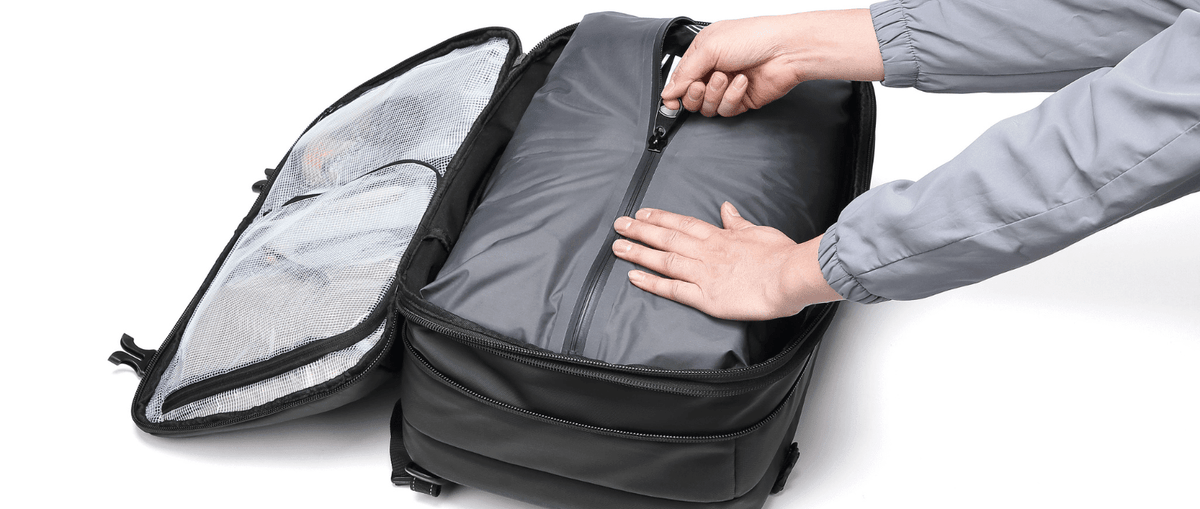
Quick answer: The most reliable way to avoid budget airline baggage fees is to travel with one bag that fits the airline’s free personal-item allowance. Check the exact size limit for your fare, pack a soft-sided backpack, compress bulky clothing, weigh and measure the finished bag, and pay for extra baggage online only if you genuinely need it.
Low-cost airlines can advertise remarkably cheap fares because the base ticket often excludes an overhead cabin bag or checked luggage. The cheapest trip is therefore not always the flight with the lowest headline price—it is the itinerary with the lowest total price after baggage, seats and other extras.
This guide explains how to avoid budget airline baggage fees without relying on risky “hacks.” You will find current personal-item limits for several popular carriers, a practical packing strategy, and links to every Nomadity vacuum compression travel backpack. Use the personal-item size checker below the article to compare your chosen backpack with the airline for your next flight.

Why budget airlines charge baggage fees
Budget airlines separate the ticket from optional services. A basic fare may include only an under-seat personal item, while an overhead cabin bag, checked bag, priority boarding or seat selection costs extra. Those add-ons vary by carrier, route, date and booking stage, so compare the final checkout total—not just the advertised fare.
A personal item is the smaller bag that goes under the seat in front of you. A cabin bag or carry-on normally goes in the overhead bin. On many low-cost fares, the personal item is included and the overhead bag is not. Packing into the smaller allowance is therefore the clearest path to avoiding a bag charge.
Free personal-item sizes on popular budget airlines
These allowances were checked on August 3, 2026. Airlines can change their policies, and allowances may vary by fare or route, so open the linked airline page again before you fly.
| Airline | Free personal-item allowance | What the airline says |
|---|---|---|
| Ryanair | 40 × 30 × 20 cm | One small personal bag is included and must fit under the seat. |
| easyJet | 45 × 36 × 20 cm | Everyone may bring one small under-seat cabin bag for free. |
| Wizz Air | 40 × 30 × 20 cm, up to 10 kg | The free carry-on bag must fit under the seat. |
| Frontier | 18 × 14 × 8 in | One personal item is included; dimensions include handles, wheels and straps. |
How to avoid budget airline baggage fees: 10 practical strategies
1. Compare the total trip price
Price the flight twice: once with only the included personal item and once with every bag you expect to take. A slightly higher fare on another carrier can be cheaper after luggage is added.
2. Build your trip around the free personal item
Start with the smallest allowance on your itinerary. If you are flying outbound with easyJet and returning with Ryanair, pack for Ryanair’s stricter 40 × 30 × 20 cm limit unless your fare includes more.
3. Use a soft-sided backpack
A rigid case cannot become smaller when it is slightly underpacked. A soft-sided travel backpack is easier to keep within a sizer, but handles, straps and filled exterior pockets still count toward the final dimensions.
4. Pack a small travel capsule
Choose pieces that work together: two bottoms, three or four tops, one light layer and one pair of compact shoes. Rewear outer layers and plan laundry on longer trips. Packing complete outfits usually prevents “just in case” items from taking over the bag.
5. Compress bulky clothing
Vacuum compression removes trapped air from clothing and can create more usable space inside the same external footprint. It does not reduce weight, so pair compression with a luggage scale. If the technology is new to you, read how a vacuum compression travel backpack works.
6. Wear the bulkiest items
Travel in your jacket, sweatshirt and heaviest shoes when practical. Keep the outfit comfortable and make sure you can remove layers safely during the flight.
7. Measure the bag after packing
Measure height, width and depth at the fullest points after the backpack is closed and compressed. Do not rely only on the empty bag’s listed dimensions. Leave a small margin so the packed bag can enter the airline sizer without force.
8. Weigh the finished bag
Compression saves volume, not mass. A dense personal item can still exceed an airline’s weight limit. Weigh the exact bag you plan to carry, including your laptop, charger, toiletries and water bottle.
9. Keep travel-day items organized
Put your passport, phone, liquids and electronics where you can reach them without unpacking the compressed compartment. Avoid stuffing exterior pockets after measuring; that can push an otherwise compliant bag over the limit.
10. If you need more space, add the bag before the airport
When personal-item-only packing is unrealistic, compare the airline’s baggage choices during booking and again in Manage Booking. Confirm what is included before paying, save the receipt, and avoid discovering the restriction for the first time at the gate.

Use the Nomadity personal-item size checker
Scroll below this guide to use the personal-item size checker. Select a Nomadity backpack, choose compressed or expanded dimensions, and search for your airline. The tool shows whether that configuration matches the airline allowance stored in the checker and what a larger cabin bag may otherwise cost.
Important: Treat the result as a planning tool, not a boarding guarantee. Airline rules can vary by route and fare and may change without notice. Confirm the allowance on the airline’s official page before departure, and measure your backpack after it is fully packed.
Compare Nomadity backpacks for personal-item travel
All four Nomadity travel backpacks are available in the checker, so you can compare the packed configuration with your specific airline rather than relying on a universal size claim.
- Adventurer 30L — the smallest Nomadity option and a natural starting point for strict under-seat travel.
- Explorer 35L — a compact option for travelers who want extra packing room while checking the finished dimensions carefully.
- Pioneer 55L — a higher-capacity backpack; use the checker and avoid overpacking when targeting a personal-item allowance.
- Discoverer 60L — the largest option in the range; verify the compressed, fully packed dimensions for every fare.
For US checked-bag costs and the economics of carry-on-only travel, see our separate 2026 baggage fee guide. You can also review our testing discussion on whether vacuum compression bags actually work.
A simple personal-item packing checklist
- Check every airline and fare on the itinerary.
- Pack for the strictest size and weight limit.
- Use a capsule wardrobe and one compact pair of spare shoes.
- Compress clothing, then weigh the complete bag.
- Measure the fullest points, including straps and pockets.
- Keep a little empty space for the return journey.
- Recheck the airline policy before leaving for the airport.
Frequently asked questions
How can I avoid budget airline baggage fees?
Pack only the personal item included with your fare, stay within the airline’s size and weight limits, and measure the completed bag at home. If you need more luggage, compare the total price and add the correct allowance before arriving at the airport.
Is a personal item free on every budget airline?
Many budget-airline fares include one under-seat bag, but the permitted dimensions and weight vary. Check the fare conditions and the airline’s current baggage page instead of assuming one standard applies everywhere.
What is the difference between a personal item and a carry-on bag?
A personal item fits under the seat. A carry-on or cabin bag normally goes in the overhead bin and is often a paid extra on low-cost fares.
What is the Ryanair personal-item size?
Ryanair currently lists one free small personal bag measuring 40 × 30 × 20 cm. It must fit under the seat in front of you.
What is the easyJet free cabin-bag size?
easyJet currently permits one free small under-seat cabin bag measuring up to 45 × 36 × 20 cm, including handles and wheels.
Does vacuum compression make luggage lighter?
No. Vacuum compression removes air and reduces volume, but the contents weigh the same. Always check both size and weight restrictions.
Airline allowances checked August 3, 2026. Policies can change and may differ by fare or route; always verify directly with your carrier.


