
Personal Item Backpack & Airline Guides
Baggage Fees Hit Record Highs in 2026: How to Skip Them With Carry-On-Only Packing
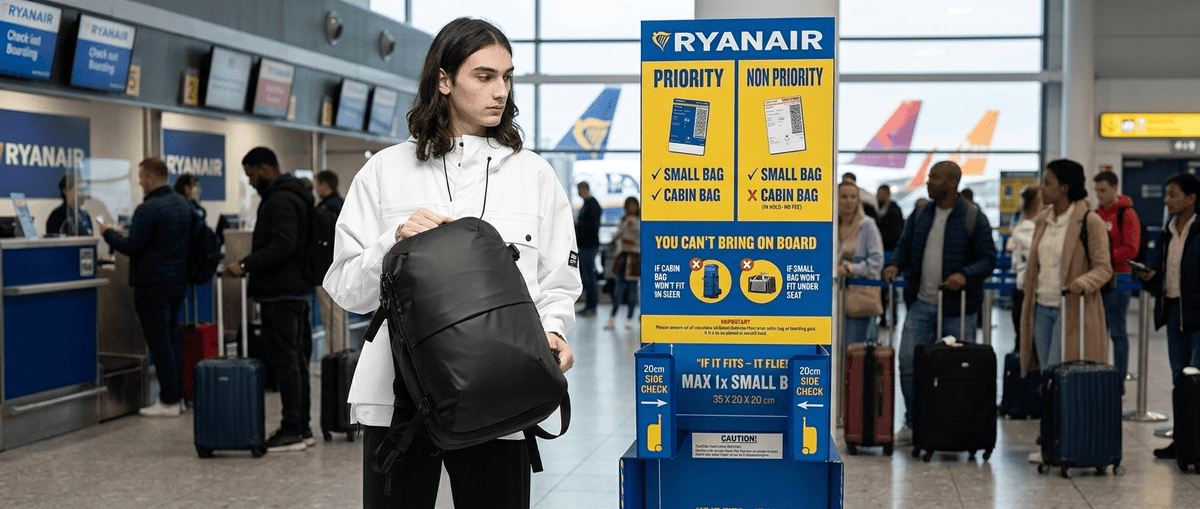
Quick answer: The most reliable way to avoid checked baggage fees in 2026 is to not check a bag at all. With first-bag fees now at $35–$50 each way on major US carriers — $70–$100 per round trip — a vacuum compression backpack that fits a week of clothes in carry-on dimensions pays for itself within one or two trips.
What happened to baggage fees in 2026
In the spring of 2026, checked bag fees rose across the board. JetBlue moved first in late March, followed within two weeks by United, Delta, and Southwest, with airlines pointing to a sharp spike in jet fuel prices. This came on top of an already record-setting year: according to Bureau of Transportation Statistics data, US airlines collected roughly $5.5 billion in baggage fee revenue in 2025.
The bigger structural shift happened in May 2025, when Southwest — the last major holdout — ended its famous free-checked-bags policy for most passengers. As of 2026, no major US carrier offers free checked bags to the general traveling public.

What a checked bag costs now
| Airline | First checked bag (2026) | Notes |
|---|---|---|
| American | $35 prepaid / $40 airport | Lowest among the legacy carriers |
| United | $45 prepaid / $50 airport | Raised $10 in April 2026 |
| Delta | ~$45 | Raised in April 2026 |
| Southwest | $45 | Ended free bags May 2025; raised again April 2026 |
| JetBlue | From $39 | Higher during peak periods |
Fees are per bag, per direction, for standard economy without elite status or co-branded credit cards. Always verify current fees with your airline — they've changed twice in the last year. Sources: Bureau of Transportation Statistics; airline fee schedules as reported by Skyscanner and industry press, April 2026.
The math: one backpack vs. one year of bag fees
Take a conservative case: two round trips per year, one checked bag each way, at $45 per bag. That's $180 in fees annually — and it repeats every year. Compare that to a one-time purchase of the Nomadity Discoverer 60L Vacuum Compression Travel Backpack ($119.99), which expands to the capacity of a small suitcase and compresses your clothes down to carry-on size. It pays for itself before your second trip. The smaller Explorer 35L ($89.99) and Adventurer 30L ($69.99) break even even faster.
How to fit a week of clothes in a carry-on
Going carry-on-only for a full week is a space problem, and vacuum compression solves the space problem directly. Removing the air trapped between fabric layers typically shrinks regular clothing by around 50–60% of its volume, and bulky items like puffer jackets by up to 80%. In practice, that means the pile of clothes that would normally demand a checked suitcase compresses into a carry-on footprint.
A simple system that works:
- Lay out everything, then cut a third. Most overpacking is duplicate outfits. Plan to re-wear layers.
- Compress the soft stuff. Shirts, pants, knitwear, and jackets go in the vacuum compartment or in standalone compression bags. This is where you win most of your space back.
- Keep structure out of the vacuum. Shoes, toiletries, chargers, and anything rigid pack normally around the compressed block.
- Compress the night before, not at the gate. A portable pump like the Mini Travel Vacuum ($39.99) takes about a minute per compartment and works anywhere with a charge — including for re-packing at your destination.

The honest caveat: space, not weight
Vacuum compression reduces volume, not mass. Your clothes weigh the same compressed or not, and cabin baggage weight limits — often around 7–10 kg on stricter carriers, especially in Europe — still apply. Compression lets you use your allowance fully instead of running out of room first; it doesn't let you exceed it. Weigh your packed bag at home before you fly.
Other ways to cut bag fees
If you do need to check a bag: prepay online (typically $5 cheaper than at the airport), consider airline co-branded credit cards that waive the first bag fee, and compare fare bundles — sometimes a fare tier that includes a bag costs less than base fare plus fees. But every one of those still costs money or commitment. Packing lighter costs neither.
FAQ
How much are checked bag fees in 2026?
On major US carriers, a first checked bag runs roughly $35–$50 each way in standard economy, after industry-wide increases in April 2026. Budget carriers may also charge for full-size carry-ons.
Is a carry-on still free?
On most major carriers a full-size carry-on is included in standard economy, but basic economy fares on several airlines include only a personal item. Check your fare type before assuming.
Does a vacuum compression backpack count as a carry-on?
Sizes vary by model and airline. A 30–35L backpack generally fits carry-on rules comfortably; always check your airline's dimensions, particularly on European low-cost carriers with stricter sizers.
Related reading: Do vacuum compression bags actually work? What the numbers say · Best Airback alternatives in 2026 · Shop vacuum compression backpacks


