
Personal Item Backpack & Airline Guides
TSA & Vacuum Compression Backpacks: What Happens During Inspection?
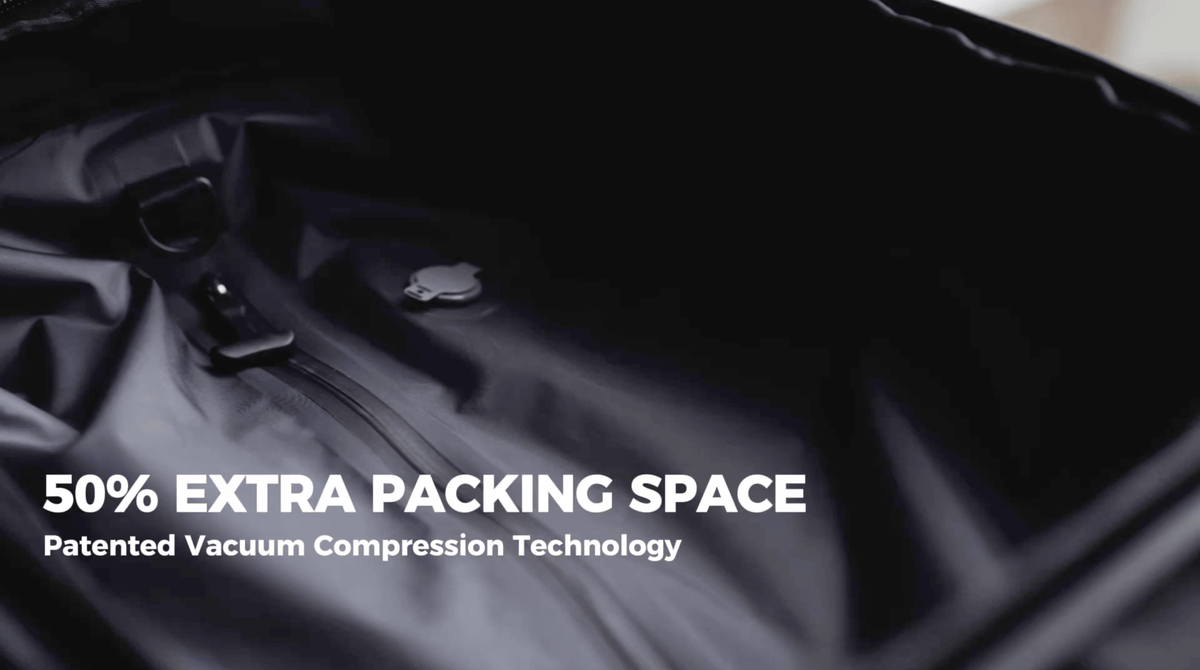
Quick answer: TSA allows vacuum-sealed clothing bags in carry-on and checked baggage, but it does not encourage them because an officer may need to open the sealed compartment if it alarms during screening. A vacuum compression backpack is therefore permitted, but you should be ready to open it, show the contents and recompress it after inspection.
Rules checked August 9, 2026. TSA makes the final checkpoint decision. Review the official TSA What Can I Bring list before traveling if your equipment or battery changes.

Are vacuum compression backpacks TSA approved?
“TSA approved” is often misunderstood. TSA does not approve ordinary backpack models for security screening. Instead, it publishes rules for what can be packed and officers inspect the bag at the checkpoint. TSA specifically lists vacuum-sealed clothes bags as permitted in carry-on and checked baggage with special instructions: they are allowed, but an officer may open them if they trigger an alarm.
The backpack itself goes through the same X-ray or computed-tomography screening as other cabin baggage. What matters is what is inside, how clearly it can be screened and whether any item is restricted.
What happens if TSA opens the vacuum compartment?
- An officer may ask you to identify the bag or move to a secondary-inspection area.
- You may be asked to unzip the backpack or open the airtight compartment.
- Air returns gradually and the clothing expands toward its normal packed volume.
- The officer inspects or rescreens the contents.
- After the inspection, repack and use a compatible pump to remove the air again.
The clothing does not “explode” out of the bag, but an overfilled compartment can be difficult to close once the vacuum is released. Leave enough room to reseal it without sitting on the backpack or forcing the zipper.

How to pack for an easier TSA inspection
Keep liquids outside the compression compartment
Place the 3-1-1 liquids bag where it can be removed quickly. Do not bury liquids, gels or aerosols under a dense block of compressed clothing.
Keep electronics accessible
Use the laptop compartment and keep larger electronics easy to remove if requested. Dense overlapping objects can make a bag harder to interpret on an X-ray image.
Compress clothing only
T-shirts, trousers, knitwear and other soft garments belong in the sealed compartment. Keep shoes, charging equipment, toiletries, food and hard objects in ordinary compartments.
Carry the pump where you can reach it
If the backpack is opened, a portable pump lets you recompress it before leaving the checkpoint. Devices containing lithium-ion batteries are generally best kept in carry-on baggage; confirm the exact device against the TSA item database and your airline's battery policy.
What about TSA-recognized locks?
A TSA-recognized lock is designed so officers can open it with an approved master key when physical inspection is necessary. It does not make the bag exempt from screening. The Discoverer 60L and Pioneer 55L have TSA-approved locks protecting the valuables area.
Can the vacuum pump go through TSA?
A compact electric vacuum is an electronic device. TSA's general guidance allows many battery-powered devices in carry-on baggage, while spare lithium batteries and power banks must remain in the cabin. Because battery design and airline rules vary, verify the exact pump and watt-hour rating before departure. Protect the power button against accidental activation and keep the device accessible for screening.
Does TSA care about the backpack's size?
TSA handles security screening; the airline enforces baggage dimensions and fees. A backpack can pass security and still be rejected at the gate for exceeding the personal-item or carry-on limit. After recompressing, use the Nomadity personal-item size checker and measure the final bag at its fullest points.
TSA vacuum backpack FAQ
Are vacuum-sealed clothes allowed through airport security?
Yes. TSA lists vacuum-sealed clothes bags as allowed in carry-on and checked baggage, with the warning that officers may open them for inspection.
Will TSA damage the vacuum seal?
An inspection normally requires opening the reusable zipper or compartment, not damaging it. Reclose the seal carefully and recompress after the officer completes screening.
Should I compress my backpack before security?
You can, but pack so the compartment can be opened and closed again. Do not compress prohibited items or make liquids and electronics difficult to access.
Can a vacuum compression backpack be checked?
TSA permits vacuum-sealed clothes bags in checked baggage too, but checked baggage may also be opened. Follow airline rules for batteries: a rechargeable pump may need to remain in your carry-on.
Continue planning: learn how vacuum compression works · see a realistic 60L packing list · compare Nomadity backpacks.


